

Why Depression Cure Claims Are Dangerous To Your Mental Health

Depression pushes the mind to extremes and today I’m sharing some unbelievably compelling and disturbingly common depression cure claims currently doing the rounds. Sharing the truth about this trending topic isn’t easy for me. Some of these claims are incredibly personal and highly suggestive and in some cases, well-meaning.
Before we begin, I’ve chosen not to link to or share the depression cure articles because it’s not useful or nice to tear down those who are on their own healing journey. My intention is to equip you with the right information, so you can identify when the promise of a cure is a false one.
The Painful Truth Behind Those Depression Cure Claims
According to the World Health Organisation (WHO) depression is the main cause of disability worldwide. At present the medical community is grappling to identify the exact causes of depression. While there are many possible causes, and factors that play a key role in depression, we just don’t know enough information to determine a cure.
I’ve shared in the past how one of the most painful aspects of depression is a false hope that one day, I will recover my life back. The possibility of finding a cure is compelling, however, to date there is no known cure for depression.
When my psychiatrist told me we haven’t yet found a cure for depression my heart sank. With my background in the fitness industry, I was determined to find a way to “cure” my depression. I took herbal remedies and natural supplements (including some of the ones touted as effective depression “cures”).
While being proactive gave me a sense of comfort and control, this alternative drug-free approach sadly did not alleviate my symptoms.
Here is where I want to point out that everyone experiences depression differently. I don’t doubt many people are able to effectively manage their depression with natural remedies. But when people step into the territory of claiming they have “cured” their depression it has a different effect than what may have been intended.
My intention in sharing this information is to dispel the myth for those of us fighting hard to get through depression.
Depression Cannot Be Cured But It Can be Managed
I genuinely believe a small minority of people are hugely successful in finding the sweet-spot in managing their depression. When their depression goes into remission it’s natural to want to share their success in the hope it will help others. But one disturbing trend is touting a personal win as an overall “depression cure”.
I understand that as mental health bloggers, we need to get our message seen. Getting the information out there isn’t easy and bloggers are always discovering new ways to make their blog titles highly-clickable. But when blog titles venture into being misleading, it ends up manipulating and possibly hurting the reader.
Worse than this, these kind articles can go viral, irresponsibly unleashing a tidal wave of pain and destruction. Why are depression cure claims dangerous for your health? Because these kinds of articles set up false hope, while further stigmatising mental illness.
My intention is not to tear down those genuinely trying to help but to tell the truth about depression.
To my fellow mental health bloggers, please be aware of the language you’re using. For example, in one article the blogger’s language came across as preachy and authoritative, as she emphatically stated she had found a depression “cure”.
Might it have been better to share how the natural supplements she had been taking helped her find an effective way to manage her depression? Because I would hazard a guess that if she stopped taking those miracle supplements, her depression would return.
Societal Attitudes About Mental Illness Play On Our Vulnerabilities
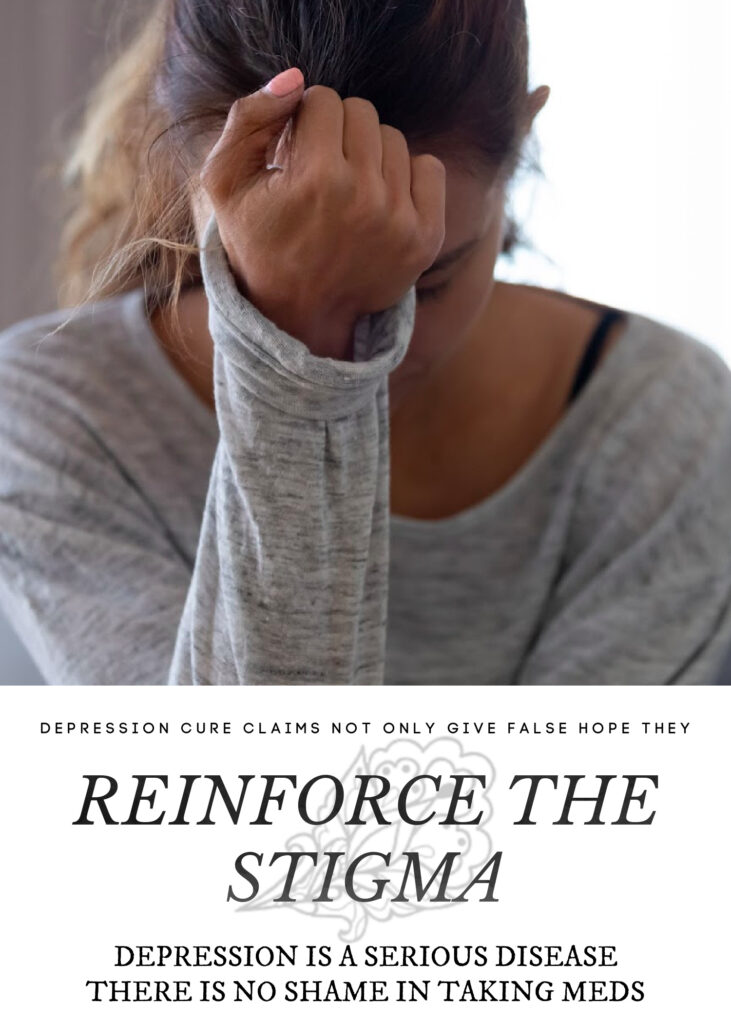
Alarmingly, many people who say they’ve cured their depression don’t realize the power of their words. In a subtle way, the preachy nature of those touting a cure play into both depression stigma and our personal vulnerabilities.
Many suggest going “drug-free” has cured their depression, demonizing life-saving medication as “happy pills”. Taking this stance reinforces societal attitudes and prejudices around mental illness.
Significantly, there is no one-off miracle-pill, supplement, or practice that can irrevocably alter the brain chemistry enough to initiate a complete depression cure. At best, some of these things can bring much needed temporary relief. Both pharmaceutical drugs and natural therapies can help manage depression, but they are not a cure.
None of the depression cure articles I have read include science-based evidence to back up their claims. Significantly, some studies have shown depression can go into a kind of remission state. But all too often, once a person stops therapeutic treatment, their depression returns.
My hope in bringing this concern to light is that we can stop the stigma
The stigma associated with the term “mental illness” is very pervasive. An integral part of stopping the stigma is accepting the clinical nature of depression. The self-defeating narrative you can cure depression insinuates that with enough effort, determination, and personal responsibility you can cure this illness. Nothing could be further from the truth.
Caught up in a lie, we waste precious energy chasing a cure, when we could be putting our efforts into finding ways to self-advocate and effectively manage this disease.
My intention in writing this article is to raise this issue, so we can end the stigma and start to embrace and advocate mental wellness. Why? Because the soul-destroying truth is when we use our energy to pursue a cure, we set ourselves up for failure.
Please don’t let the truth about depression discourage you, maybe one day there will be a cure, but until then we need to put aside the labels and assumptions about what it means to have a mental illness.
You’ve have survived through the ache of your worst days and the fact you‘re reading this is testimony to your courage, strength, and inner resilience.
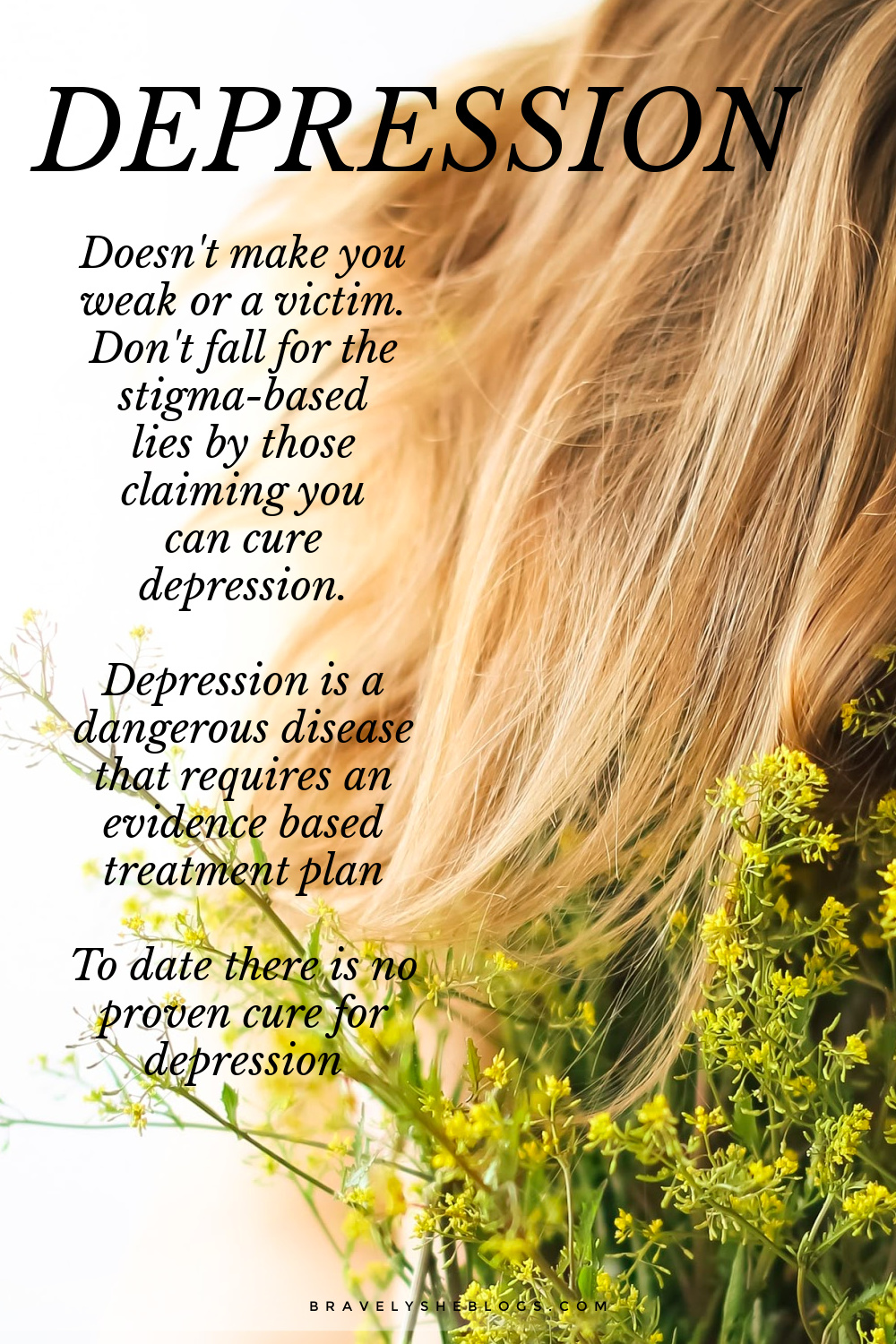
I believe in you. Keep going, you’re discovering more about yourself with each step you take in your treatment plan. Use your time and resources to focus on what works for you (and what doesn’t). If you’ve been struggling with your treatment plan, please don’t give up. No matter how difficult things might seem, you deserve to feel supported by a treatment plan that works for you.
Always remember: depression does not define you, it is a serious disease that can occur at any time, to anyone. While some people are able to manage and have functional days, others may struggle to function at all. Please if you are feeling unwell, seek immediate help and support. I’ve put together a list of numbers you can call here.
Thank you for reading, I hope this information helps you to recognise untrue claims that further stigmatise depression. If you liked this article, be sure to share it across your social networks, You never know it might help someone who is struggling right now.
Save this article for later by pinning the image below and follow Bravely She Blogs on Pinterest for more.

And now it’s over to you dear reader, have you been let down by false-information and hype around the treatment of depression. Is there anything I’ve missed, or something you would like to add to the conversation?